
Pulling Up a Chair
By Rachel White, Pastor of Next Steps
“We were delighted to share with you not only the gospel of God but our lives as well, because you had become so dear to us.” (1 Thessalonians 2:8)
Investing Time in Communities That Don’t Yet Know Christ
It’s tempting to think of Christian witness as something that happens in a moment—a conversation, an invitation, a clear gospel presentation. And sometimes it is. But more often, I’ve found that the most meaningful spiritual conversations grow out of something far less dramatic: simply choosing to be present, over time, in places where people don’t yet know Jesus.
I want to share two ordinary decisions—one from my years in Oxford, one much more recent—that taught me what it looks like to invest time, rather than just words, in a community that isn’t my own.
A House Full of Friends

When I was studying in Oxford, I made a deliberate choice about where, and with whom, to live. I could have surrounded myself with other believers—and there’s real value in that kind of community. But instead I chose to live in a house with friends who didn’t follow Christ.
It wasn’t always comfortable. Sharing a kitchen, a calendar, and the small frictions of daily life with people who don’t share your deepest convictions means your faith is on display in the unglamorous moments—not just the ones you’d choose. But that proximity was exactly the point. I wasn’t there to deliver a message and leave. I was there to belong to them, and to let them belong to me.
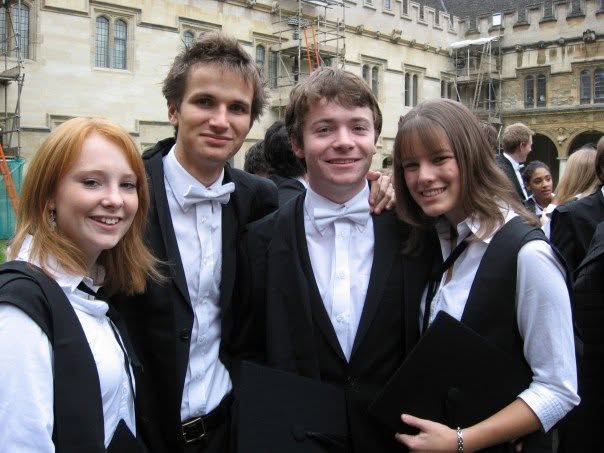
One evening, that slow investment opened a door. I hosted a wine and cheese night at the house and invited my college pastors to join us. Over good food and easy conversation, I shared my testimony with my housemates—not as a performance, but as a natural extension of a friendship that had already earned the right to be heard. The room was warm because the relationships were real. That night happened because of all the ordinary nights that came before it.
A Chaplain Backstage

Years later, the same principle showed up in a very different setting. This Spring, my daughter auditioned for a theatre production at school, and I volunteered to help. Honestly, it started simply: I wanted to connect with her, to understand the thing she loved and step into her world for a while.
But it grew into something I didn’t expect. Before long I found myself serving the kids almost like a chaplain—spending time backstage, encouraging them, supporting them, learning their names and their stories. I tried to make myself available to whatever they needed, emotional and practical alike: a steadying word before a scene, a hand with a costume, a listening ear when something at home was heavy.

I’ll admit that getting to know a crew of middle schoolers was well outside my comfort zone. I met kids from backgrounds I’m less familiar with, and I had to do a lot more listening than talking. It was also a far bigger commitment than I’d realized—multiple hours after school every day, plus weekends, for a solid month—and there were plenty of evenings I came home completely exhausted. But it was worth every bit of it. Being present meant being invited in—into both the struggles and the celebrations. We shared tears and hugs and plenty of laughter. I wasn’t there as an outsider studying them; I was there as someone who genuinely cared, and they could tell.
And then, near the end of the program, something happened that I could never have engineered. Both the theatre teacher and one of the other backstage moms asked me about my faith. One of them even asked if she could come to church sometime. I hadn’t led with a pitch. I had simply shown up, again and again, and the questions came on their own.
What Time Makes Possible
Looking back at both seasons—the Oxford house and the theatre wings—I notice the same quiet pattern. In each case, I gave something more costly than a clever argument or a well-timed invitation. I gave my time. I let myself be inconvenienced, stretched, and occasionally uncomfortable. And in each case, the spiritual conversation I could never have forced eventually arrived on its own, because trust had been built first.
Being present in communities that don’t yet know Christ rarely feels efficient. You don’t see a return on a spreadsheet. But people are not projects, and witness is not a transaction. When we invest real time—sharing meals, sharing backstage chaos, sharing tears and laughter—we earn the kind of relationship in which faith can be spoken about honestly, and received.
So if you’re wondering where to start, I’d offer the least strategic advice imaginable: just show up—and be intentional about where. It’s easy to fill a calendar almost entirely with Christian gatherings—church, small groups, Christian friends—and rarely cross paths with anyone who doesn’t already believe. Choosing, on purpose, to spend time in spaces that aren’t Christian gatherings is its own quiet act of faith. Pull up a chair at the table you wouldn’t normally choose. Volunteer for the thing slightly outside your comfort zone. Be there for the ordinary moments, and trust that God will open the extraordinary ones in His timing. More often than not, the door opens from the inside. Paul named it long before I lived it: when people become dear to us, we find ourselves longing to share not only the gospel of God but our lives as well. That sharing of life is the whole work—and it is more than worth the time.
Rachel